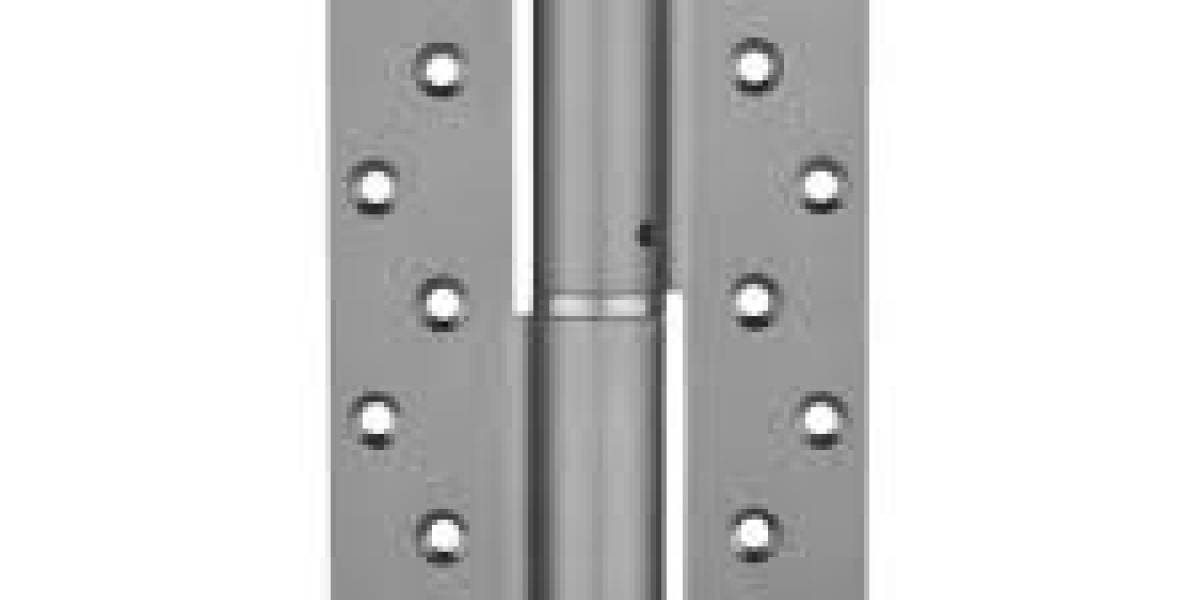

Modern door systems require hardware that supports reliable movement while also meeting functional and architectural expectations. Hydraulic Door Hinges combine hinge rotation with an integrated hydraulic mechanism to help manage how a door opens and returns toward its closed position. This approach can provide smoother operation and controlled movement in environments where doors are used frequently.
The main functional advantage comes from hydraulic control. A conventional hinge mainly allows a door to pivot around a fixed point, while a hydraulic design can regulate movement through an internal mechanism. As the door approaches the closing position, hydraulic resistance can help reduce sudden movement and excessive impact. This makes the hardware suitable for applications where controlled closing is an important part of the overall door system.
Selecting the correct hinge begins with understanding the door itself. Door construction, panel weight, thickness, frame configuration, opening direction, and installation space can all affect compatibility. Hardware should therefore be evaluated as part of a complete assembly rather than as an independent component. Proper matching can help maintain stable movement and reduce unnecessary stress on the hinge and mounting points.
Installation accuracy is another important consideration. Even a well-designed hinge can perform poorly if it is incorrectly positioned or aligned. Installers need to check the relationship between the door panel and frame before fixing the hardware in place. Consistent positioning helps maintain suitable clearances and allows the door to move through its intended opening and closing cycle without unnecessary resistance.
Adjustment capability can provide additional flexibility during installation. Minor differences in door alignment, frame positioning, or construction tolerances may affect how a door moves after installation. Depending on the product design, adjustment features can allow installers to make appropriate corrections and achieve a more consistent relationship between the door panel and frame. This is particularly useful for projects involving multiple doors that need a uniform appearance and operating experience.
The visual design of door hardware also matters in contemporary architecture. Many residential and commercial projects favor simple surfaces and coordinated hardware that does not visually dominate the door. A hydraulic hinge can contribute to this design approach when its construction, finish, and installation position are selected to complement the surrounding hardware. Functional performance and visual integration can therefore be considered together.
Material and manufacturing quality influence the reliability of the complete hinge assembly. The hinge body, pivot areas, mounting sections, and internal hydraulic components need to work together under repeated mechanical loads. Consistent manufacturing can support dimensional accuracy, while suitable material selection can help the hinge withstand the operating conditions of its intended application.
Usage frequency should also influence the selection process. A door in a private room may experience relatively limited daily movement, while a commercial entrance, office passage, hotel facility, or public building can experience substantially more cycles. In higher-traffic environments, stable movement and consistent closing behavior become increasingly important. Choosing hardware according to actual usage conditions can help create a more appropriate door system.
Maintenance planning is another factor worth considering. Door hardware may require periodic inspection to confirm alignment and operating performance. If adjustments are needed, accessible and practical hardware construction can make maintenance more efficient. Checking for unusual movement, changes in closing behavior, or mounting issues can also help maintain the intended operation of the door.
For architects, contractors, door manufacturers, and hardware distributors, the selection process should connect the hinge design with the complete application. Door structure, operating frequency, installation conditions, desired closing behavior, and appearance should all be considered together. When evaluating Hydraulic Door Hinges for a specific project, buyers can review the available product information and catalogue at https://www.hinges-factory.com/product/catalogue-download/ to identify a suitable solution for their door requirements.