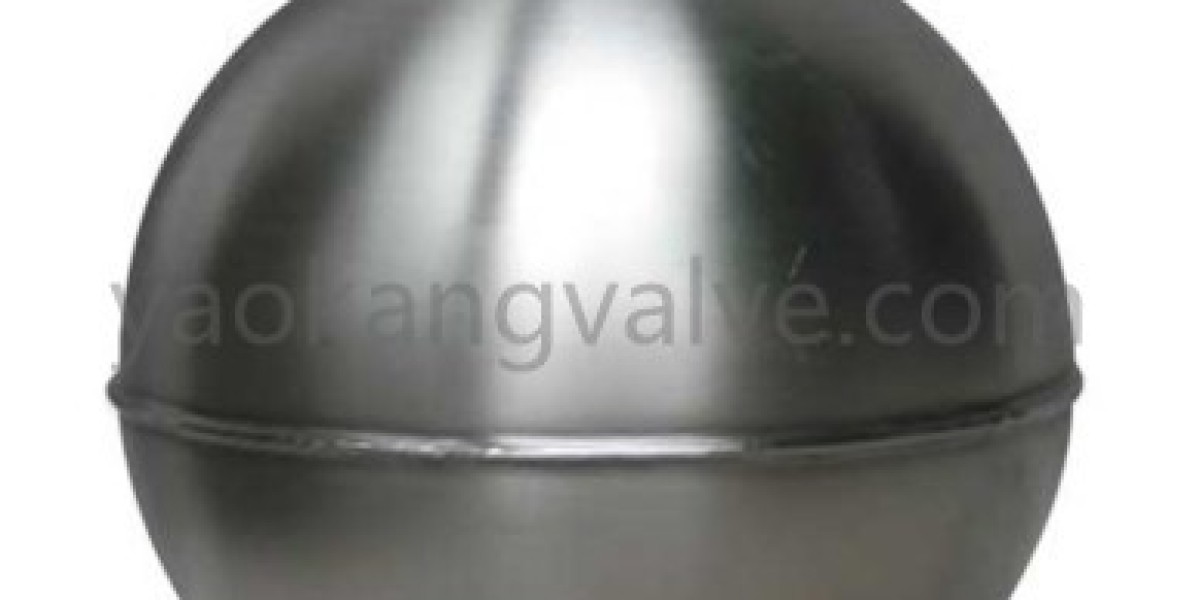

In automatic liquid level control systems, a Float Ball can provide a straightforward mechanical response to changes in fluid level. Its buoyant movement can be transferred through a connected lever, stem, or valve mechanism to regulate the flow of liquid. While the operating principle is simple, the effectiveness of the complete system depends on suitable material selection, accurate construction, compatible dimensions, and consistent manufacturing quality.
The basic working process begins when the component is exposed to a changing liquid level. As the liquid rises, buoyancy causes the float to move upward. This movement can activate the connected valve mechanism and restrict or stop incoming flow. When the liquid level decreases, the float moves downward and allows the mechanism to return toward its original position. This repeated movement provides an automatic way to respond to changing conditions without requiring continuous electrical control.
Material selection plays an important role in component performance. Different applications can expose the float to water, treated liquids, industrial fluids, temperature changes, or other environmental conditions. Materials should therefore be selected according to corrosion resistance, mechanical strength, weight, surface requirements, and compatibility with the surrounding equipment. Stainless steel and other suitable materials are often considered when durability and resistance to demanding environments are important.
The geometry of the float also affects its behavior. Buoyancy depends on the relationship between displacement, material density, and the liquid in which the component operates. A suitable design must provide enough buoyant force to move the connected mechanism effectively while maintaining stable operation throughout the required movement range. Internal construction, wall formation, overall dimensions, and weight distribution can all contribute to the final operating characteristics.
Manufacturing consistency is particularly important when components are produced for repeated valve assemblies. Forming, machining, welding, polishing, and other processes should be controlled to maintain consistent dimensions and surface quality. Uneven surfaces, deformation, poor joining, or dimensional variation can interfere with movement or affect the connection between the float and the valve mechanism. Careful inspection can help reduce these issues before components enter assembly or shipment.
Connection compatibility should also be considered during selection. A float normally operates as part of a larger mechanical system rather than as an independent product. Its connection point must work correctly with the associated lever or stem, while its movement should correspond with the intended valve action. Even when the basic float shape appears suitable, differences in connection dimensions or movement requirements can affect the performance of the complete assembly.
Operating conditions provide another important selection reference. A component used in a household water system may have different requirements from one installed in industrial equipment. Temperature, fluid composition, vibration, installation orientation, cleaning conditions, and frequency of movement can all influence the choice of construction. Considering these factors before production helps manufacturers develop components that are better aligned with the actual working environment.
Surface finishing can contribute to both appearance and functional consistency. Depending on the selected material and application, finishing processes may improve surface uniformity and help prepare the component for integration with other valve parts. For metal products, appropriate finishing can also support resistance to environmental exposure. The finishing method should be compatible with the base material and the intended operating conditions.
Quality inspection can cover several aspects of production, including dimensions, appearance, connection areas, welding quality, surface condition, and structural consistency. Where necessary, manufacturers may also perform functional or buoyancy-related checks to confirm that the component behaves as expected. A systematic quality process can help maintain consistency when the same design is supplied for multiple valve assemblies or equipment programs.
For buyers, providing application information can make product selection more precise. Details about the liquid, valve structure, installation environment, connection method, and expected operating conditions can help manufacturers evaluate the appropriate design. This communication is particularly useful for customized components, replacement parts, and applications where the float must work with an existing valve mechanism.
From water management equipment to industrial fluid systems, the combination of buoyancy and mechanical movement makes this type of component useful for automatic level response. A properly designed Float Ball should be considered together with its material, dimensions, connection structure, and operating environment rather than as an isolated part. To explore related valve products and component solutions, visit https://www.yaokangvalve.com/product/ for more information.